Girl by Moonlight Review — Choose the Hope, Tragedy, and Transformation Your Group Wants
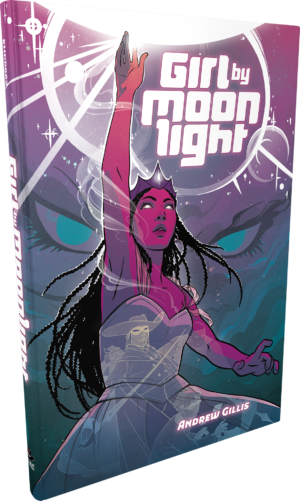
Girl by Moonlight uses magical transformation to examine the cost of hiding identity and the power of relationships. Andrew Gillis’s game draws on Forged in the Dark procedures, but its campaign promise depends heavily on which series playset the group chooses. The first decision is therefore not which character looks most spectacular. It is whether the table wants hope, tragedy, mecha conflict, or a more dreamlike mystery.
Four series create different expectations
At the Brink of the Abyss centers heroic resistance against a corrupted world. Beneath a Rotting Sky points toward tragic pressure and compromised hope. On a Sea of Stars uses giant machines and their relationships with pilots. In a Maze of Dreams emphasizes a different, more surreal mode of discovery.
Those are not cosmetic setting swaps. They change the problems characters face and what a campaign’s development should feel like.
Choose together before building characters. A player expecting an ultimately hopeful transformation story can be disappointed by a tragic series even while enjoying the same visual genre. The game makes that choice available; the table needs to use it.
Transformation changes how characters can act
The move into a magical form provides access to capabilities unavailable in ordinary life. The difference gives missions and personal scenes distinct pressures.
That is useful because identity has a mechanical presence. A character’s ability to act openly and powerfully is not simply a costume description. The circumstances around revealing and concealing the self affect play.
The game’s emotional subject is broad enough that the magical-girl label should not be reduced to one narrow character template. Discuss what transformation means in this particular series and how the group wants to represent its characters.
Stress, consequences, and Eclipse create pressure
The system gives players resources and procedures for taking risks, helping one another, and responding to consequences. Eclipse connects mounting pressure with losing control or moving into a darker state according to the game’s rules.
That supports a story where exceptional capability does not erase vulnerability. The characters can achieve extraordinary things while needing support and facing costs.
The mechanics take learning, particularly for players new to Forged in the Dark terminology. Explain the relevant sequence through a small mission rather than assume genre enthusiasm makes the resource loop intuitive.
Relationships do more than decorate a mission
Connections between characters affect how they support and influence one another. Downtime and personal scenes give those connections space to develop outside immediate danger.
This is the game’s strongest attraction. The group’s relationships are not optional breaks between the “real” action scenes. They help explain what action means and what pressure the characters can withstand.
It can also be a barrier. Players who prefer to keep interpersonal drama minimal may find the design asks for an activity they do not especially enjoy. The system is a less natural fit for a campaign focused chiefly on optimizing attacks and winning isolated fights.
Playbooks define emotional and practical roles
The character options provide different ways to relate to power, the team, and the surrounding world. Their prompts can help players establish tensions without needing to invent a complete private history.
The group should connect those tensions during creation. A campaign is easier to begin when characters have reasons to care about one another rather than only interesting individual secrets.
Do not require real personal disclosure to make a scene meaningful. Players can explore identity through fiction while keeping their own lives private. The game’s intensity should remain chosen rather than assumed.
The series tools help the campaign develop
Shared creation and campaign procedures give the GM guidance beyond a broad instruction to produce an emotional magical adventure. The playsets establish the kind of world and conflict the group is building.
That is useful support, but not a complete script. The GM still needs to turn threats and relationships into situations with understandable stakes and space for player choices.
B3’s verdict
Girl by Moonlight is a strong fit for groups that want transformation, identity, and relationships to carry mechanical weight. Its series playsets make the tonal choice explicit, while mission and downtime procedures give the drama structure. Its limitations are the initial rules vocabulary and the expectation of active interpersonal play. Choose the series first, then decide whether its emotional promise is the campaign everyone wants.
Find the book
As an Amazon Associate I earn from qualifying purchases.
- Search Amazon for Girl by Moonlight — Amazon search