Fate Core vs. Fate Accelerated — Which Version Fits Your Table?

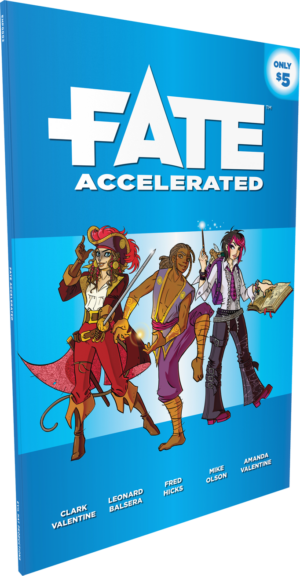
Fate Core and Fate Accelerated share the same central idea: the traits that define a character should affect both what they can accomplish and what makes their life difficult. The most useful difference is how their ratings describe action. Core emphasizes areas of expertise; Accelerated emphasizes approaches. Choose according to what distinctions your campaign needs players to make.
Core asks what you are good at
Skills such as Investigate, Rapport, and Athletics distinguish capabilities. Two characters confronting the same problem may use different expertise to approach it.
That is useful when the campaign cares who knows medicine, who can handle a vehicle, or who understands a social institution. The skill list makes those differences visible on the sheet.
It also takes more character-building attention. A new player has to decide which abilities deserve the highest ratings. That can be rewarding for a clearly defined concept, but awkward when the person has not yet seen what the campaign’s scenes will involve.
Accelerated asks how you act
Approaches—Careful, Clever, Flashy, Forceful, Quick, and Sneaky—describe methods. A character might solve a problem through force in one scene and use the same Forceful approach in a very different activity later.
This works especially well when characters share broad capabilities but have distinct styles. A group of young magicians or capable adventurers need not separate every category of expertise to remain different from one another.
The danger is reducing the conversation to always selecting the highest number. The player still has to describe an action that genuinely uses the approach, and that method can affect what is possible or what consequences arise.
Both use aspects as fictional truths
An aspect describes something true about a character or situation. It can provide permission to act, support an invocation, or create trouble through a compel. Fate points connect important benefits and complications to a resource economy.
An original courier with “I Never Leave a Passenger Behind” has a reason to risk a rescue and a vulnerability when escaping quickly would mean abandonment. The same trait can help and complicate play.
That is the system’s central pleasure. Character identity is not a paragraph everyone forgets after creation. It produces choices. Vague aspects such as “Mysterious Past” need further detail before they reliably suggest actions or trouble.
The action structure is still defined
Overcome, create an advantage, attack, and defend organize resolution. Creating an advantage can establish a useful aspect or exploit one already present, supporting later action through free invocations.
For example, a courier might inspect a damaged bridge and create “A Stable Route Along the Edge.” A later crossing can use that preparation. The procedure makes setup matter rather than leaving it as decorative narration.
Both versions use Fate dice and rated opposition. Accelerated is shorter, but it is not freeform roleplaying without numbers or consequences.
Compels require a clear conversation
A compel introduces a complication associated with an aspect. Players should understand the proposed development and their options under the rules.
The GM should not treat an aspect as permission to punish someone whenever it is convenient. The complication should make this character’s story more interesting and arise from the trait in a recognizable way.
New groups may need practice with that vocabulary. A short scene demonstrates the economy better than a long explanation of every possible use. Allow aspect revision once players understand what their phrases actually do.
Which version fits a first campaign?
Choose Core when differences in expertise are central and the group wants fuller guidance and examples. Choose Accelerated when the premise gives everyone similar fictional capabilities and different methods are the more useful distinction.
For an original skyship crew, Core can distinguish the engineer, navigator, and diplomat. For rival apprentices all learning the same magic, Accelerated can emphasize careful preparation, improvisation, and showmanship. Either version can handle either premise, but the initial fit affects how naturally players describe actions.
The official digital material offers an inexpensive way to test both before buying physical books. Do not select solely by page count: shared interpretation and useful aspects still take learning in the shorter version.
B3’s verdict
Both versions are good choices for groups that want identity and complications to drive play. Core gives expertise a clearer mechanical division; Accelerated gives style the stronger emphasis. Their common limitation is the need to discuss fictional meaning rather than rely entirely on fixed ability lists. Pick the distinction your campaign needs, run a small scene, and revise the aspects that did not give anyone something useful to do.
Where to start: rules, editions & buying options
Core and Accelerated are alternative starting systems; you do not need both to begin. Pick the skill-based or approach-based version that suits the campaign, then use that version’s character sheets. Check the publisher’s digital listings for current download options and pricing.
Find the book
As an Amazon Associate I earn from qualifying purchases.